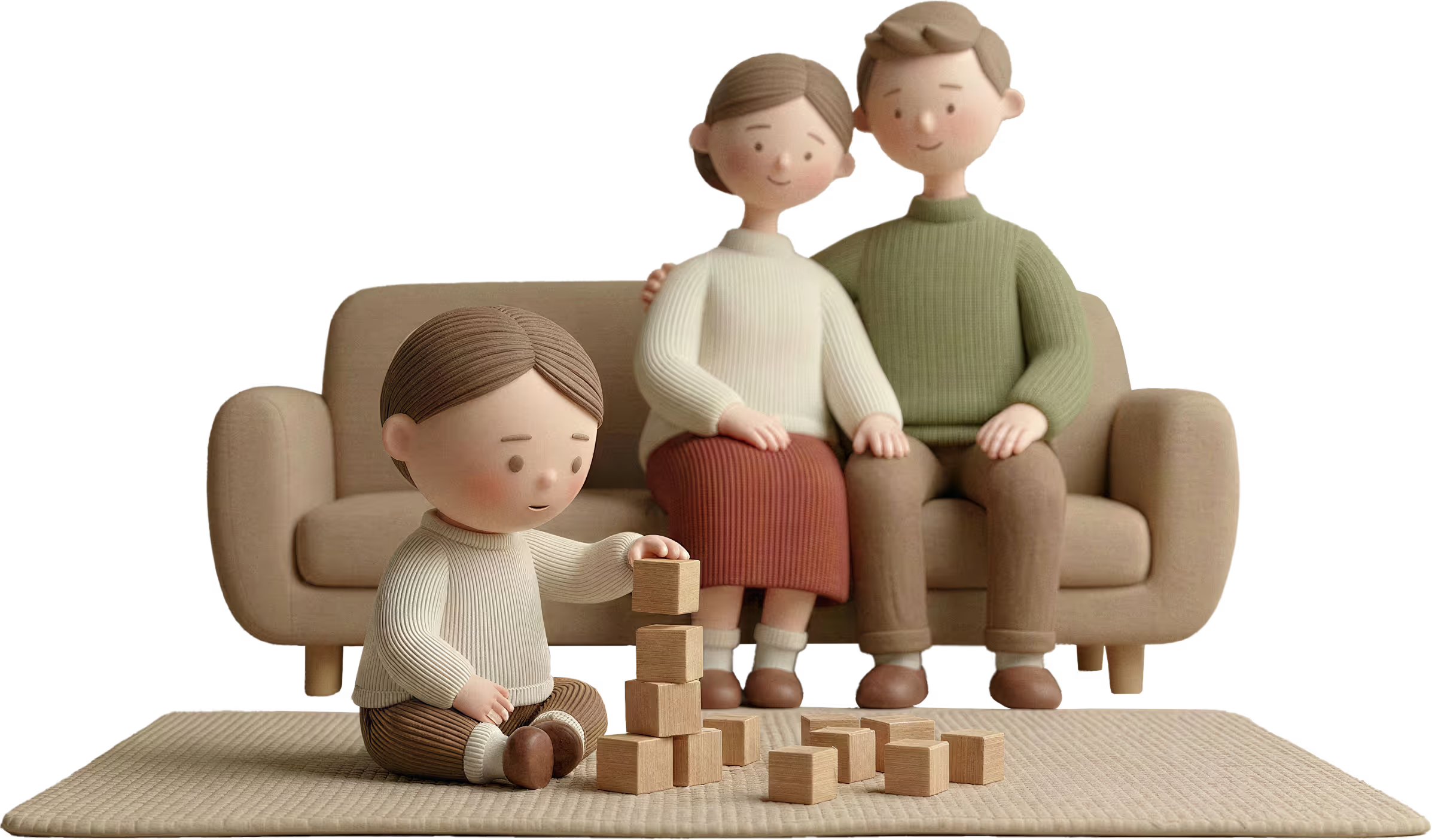
Do this: Separate poop from performance. Offer predictable sitting times after meals, when the body is more likely to be ready. Keep sits short. Use a stool so their feet are supported. If they need a pull-up for now, keep the plan calm and move one small step closer to the toilet rather than turning it into a battle.
Skip this: Begging, bribing, cheering too intensely, or saying, “You already know how to use the potty.” Do not shame accidents. Do not force long sits. Do not make poop the main family conversation every time your child looks uncomfortable.
Expect this: Progress may be slow and uneven. A child may pee easily and still need weeks or months to feel safe pooping on the potty. The first win may not be poop in the toilet. It may be less hiding, less panic, sitting with clothes on, or telling you before it happens.
Pee clicked. Poop did not. That is one of the most frustrating parts of this stage. Your child may be dry most of the day. They may run to the potty for pee, wear underwear confidently, and seem to understand the whole idea of using the toilet. Then poop arrives and everything falls apart.
They hide. They ask for a pull-up. They stand beside the toilet and refuse to sit. They hold it until they are uncomfortable. They have accidents in underwear. They panic when they feel it coming. They may even seem proud of using the potty for pee and completely unavailable for poop. This can make parents feel like the child is choosing the hard version on purpose. But pee and poop are not the same task for a young child.
Pee is faster. It is less visible. It does not usually stretch the body in the same way. Poop can feel bigger, slower, stranger, smellier, and more connected to the body. If there has ever been pain, constipation, pressure, surprise, or a scary toilet moment, the body may start treating poop as something to control by holding on.
That is why poop training often lags behind pee training. It is not necessarily regression. It is not necessarily refusal. It is often a child whose body can handle one part of toileting but not yet the part that requires more sensation, more trust, and more letting go.
The goal is not to force poop into the toilet as quickly as possible. The goal is to make poop feel safe enough that your child stops needing to defend against it.
Probably normal if... your child pees on the potty but still avoids pooping there, especially during the early months of toilet learning. They may ask for a pull-up, hide to poop, or have occasional accidents, but they are not in pain and the pattern is not getting worse.
Worth watching if... your child is holding poop for long periods, having large or painful stools, crying when they need to go, or becoming more fearful over time. Also watch if accidents are frequent and your child seems unable to tell whether poop is coming, or if the whole topic has become charged in the house.
Get outside help if... your child is constipated, has painful bowel movements, withholds for several days, has blood in stool, loses appetite, vomits, or seems afraid of pooping because it hurts. Talk to a pediatrician before treating this as a behavior problem. Pain changes the entire situation.
The pattern often gets harder when poop becomes the test of whether toilet training has worked. That is the poop-pressure loop.
It usually starts because the parent sees real progress. Pee is working. Underwear is working. The potty is familiar. So when poop stays stuck, it feels like the final step should be right there. The parent starts watching more closely.
“Do you need to poop?”
“Are you sure?”
“Let’s sit.”
“Try again.”
“Just push a little.”
“You did pee. You can do poop too.”
The intention is support. But to the child, the body becomes monitored. Every wiggle, fart, squat, or quiet moment starts to mean an adult may appear with potty pressure. The child feels less in charge of the body, so they hold tighter.
If there has ever been pain, the loop gets even stronger. The child holds because they are afraid it will hurt. Holding makes the next poop harder. A harder poop hurts more. The fear is confirmed. Now the toilet is not the main problem. The body is trying to avoid pain.
The repair is to lower the pressure and increase predictability. Poop should not become a surprise interrogation. It should become part of a calm body rhythm: meals, short sit, feet supported, no performance, try again later. The child needs to feel: my body can do this, I will not be trapped here, and nobody is mad at me.
That is usually the beginning of the shift.
When poop is the part that will not click, Mabel can build something specific to your child: a low-pressure potty script, a small-step poop plan, or a story that helps their body feel safe enough to let go.