Do this: Keep the seated expectation short and clear. For a young child, ten calm minutes may be a real meal. Use a stable seat, foot support if possible, and one predictable place for eating. If they leave, pause before calling them back. Let the table be where food happens.
Skip this: Following them around with bites. Turning every return to the chair into a negotiation. Letting them run off and come back twenty times with food in hand. Expecting a two- or three-year-old to sit as long as the adults want to sit.
Expect this: They may eat less at first if grazing stops. That can feel uncomfortable. Look at the whole day, not one meal. The first goal is teaching the shape of eating: food happens at the table, the meal has a beginning and an end, and leaving means the meal is closing.
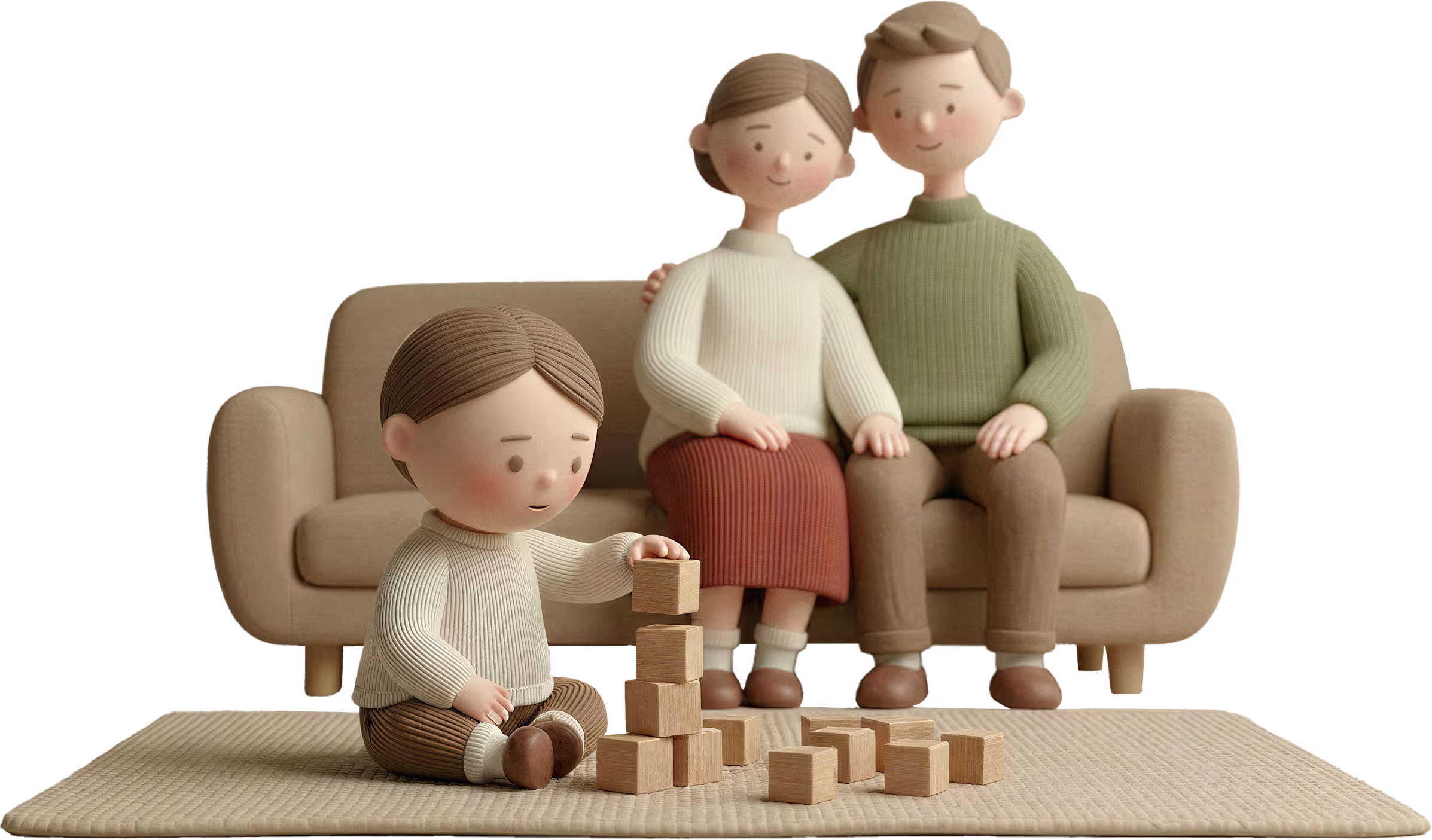
The meal begins, and your child is already halfway gone. They sit for three bites, then slide off the chair. They wander toward the toys. They climb down and come back. They ask to sit on your lap. They circle the table. They eat standing up, or take one bite and leave, or seem to need their whole body in motion just as everyone else is trying to sit. This is different from refusing food. Sometimes your child may actually be hungry. The hard part is not the food itself. It is the sitting.
For a young child, meals ask for a lot of control at once. Stay in one place. Keep your body near the chair. Wait while other people eat. Use utensils. Tolerate food smells and textures. Follow the rhythm of adults who may want to talk, slow down, or finish a plate. That can be too long and too still for a toddler or preschooler whose body is built for movement.
The parent side gets frustrating quickly because the meal stops feeling like a meal. You cannot tell whether they are done, distracted, avoidant, or just being difficult. You may start following them with bites, calling them back, threatening the end of dinner, or letting them graze because at least some food is getting in. That is usually how the wandering becomes the pattern.
The goal is not to make a young child sit through an adult-length dinner. The goal is to create a short, clear meal container that their body can actually learn.
Probably normal if... your child has trouble staying seated but eats enough across the day, can sit briefly for preferred foods, and is still learning the rhythm of meals. Many young children can manage only a short seated window, especially at dinner when they are tired.
Worth watching if... your child almost never sits to eat, meals regularly turn into chasing or grazing, or they seem unable to stay seated even for a few minutes. Also watch if the movement comes with gagging, distress, pain, strong sensory reactions, or a very limited range of foods.
Get outside help if... your child is not growing as expected, cannot safely chew or swallow while seated, eats almost entirely while moving around, or mealtimes are causing major distress. A pediatrician, feeding therapist, occupational therapist, or dietitian may help if the issue seems bigger than routine sitting difficulty.
The pattern often gets stronger when the child learns they can leave the table without leaving the meal.
That is the wandering-graze loop. It usually starts because the parent wants the child to eat. Your child gets down after a few bites. You call them back. They take another bite. They leave again. You follow with the fork. They open their mouth beside the couch. They come back for a cracker. They wander away with a piece of toast. By the end, they did eat something, but the table did not hold.
From the parent side, this feels practical. Some food is better than no food. From the child side, the meal becomes portable. They learn that eating does not require staying seated. They can keep playing and still receive bites. They can drift in and out. They can avoid the boring part of the meal without losing access to the food. Over time, the table becomes less meaningful. The parent has to work harder to gather the child back, because the child has not been practicing the basic sequence: sit, eat, finish, leave.
The second thing that keeps it going is asking for too much sitting too soon. If the expectation is an adult-length meal, the child will fail early. Then the parent either gets angry or abandons the structure completely. A shorter meal that actually holds is better than a long meal that dissolves into chasing. The repair is to make the container smaller and more consistent.
Food happens at the table. The seated window is realistic. Getting down means the meal is ending or pausing, not becoming a moving snack route through the house.
This is not about control for its own sake. It is about making meals legible.
When meals keep turning into wandering, Mabel can build something specific to your child: a short table script, a meal rhythm plan, or a story that helps sitting and eating feel like a small routine instead of a long demand.