Do this: Stop harm first. If bodies are grabbing, hitting, or pulling, separate hands and secure the object. Then choose one simple system: first turn and next turn, timer, trade, duplicate if available, or toy goes away if it cannot be used safely. Use the same system often enough that the children begin to know what happens next.
Skip this: Trying to reconstruct the full legal history of the toy. “Who had it first?” “How long did they have it?” “Did you take it from them?” “But you weren’t even playing with it.” Those questions may be relevant sometimes, but in the hot moment they often turn you into a courtroom and give both children more reasons to argue.
Expect this: Someone will probably still feel wronged. That does not mean the plan failed. In sibling conflicts, the first win is often not happiness. It is a safer, more predictable pattern than grabbing, screaming, and parent-as-judge.
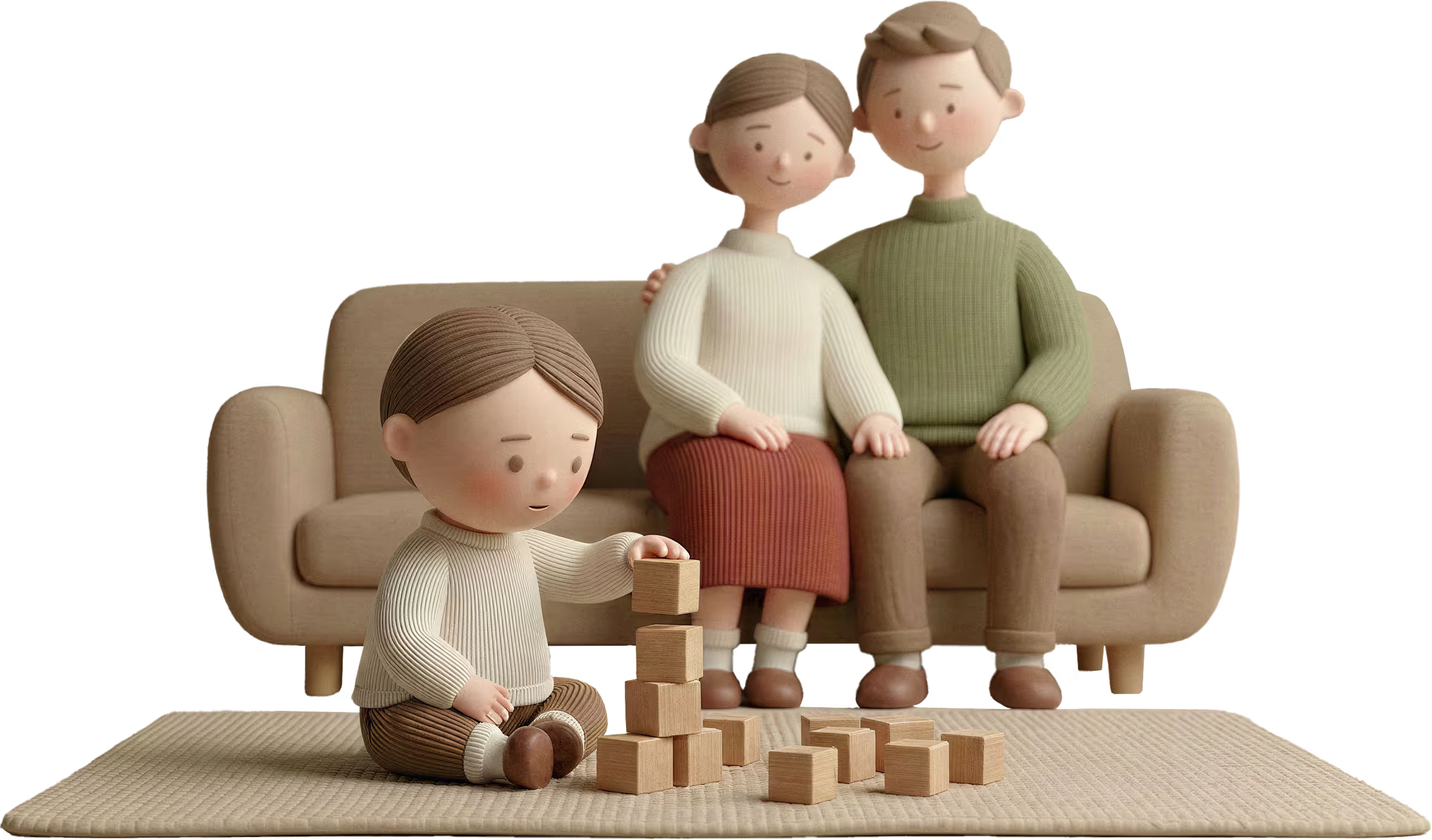
It is never just any toy. There may be fifty things in the room. Blocks, books, stuffed animals, cars, dolls, costumes, half-built towers, forgotten birthday gifts. But somehow both children want the same one. The same truck. The same marker. The same blanket. The same chair. The same plastic thing no one cared about ten minutes ago. Then the whole room narrows to that object.
One child had it first. The other child wants it now. Someone grabs. Someone screams. Someone yells, “Mine.” Someone says, “They had it forever.” You step in, and suddenly you are being asked to become judge, timer, historian, fairness expert, and emotional referee at the exact moment everyone is too worked up to hear much.
This is one of the most repetitive sibling conflicts because the toy is not only a toy. It is possession, control, attention, status, and fairness in one small object. For young children, wanting what someone else has is often more powerful than wanting the object itself. The toy becomes brighter because the sibling is holding it.
That does not mean the conflict is fake. It feels real to them. A young child’s sense of ownership is immediate and intense. Waiting is hard. Seeing someone else enjoy something can feel like losing access to it forever. And if the parent rushes in every time to decide who gets what, the children may never get enough practice with the smaller skills underneath: asking, waiting, trading, choosing another thing, or tolerating that someone else has a turn.
The goal is not to make both children feel perfectly fair in the moment. That may not happen. The goal is to stop the toy from turning you into the court of appeal every single time.
Probably normal if... your children fight over the same object, grab from each other, protest turns, or become suddenly attached to whatever the other child has. This is common in young sibling dynamics, especially between toddlers and preschoolers who are still learning ownership, waiting, impulse control, and social repair.
Worth watching if... the conflict is becoming more physical, one child is consistently overpowering or intimidating the other, or the same child is always losing access because the other escalates more loudly. Also watch if you are spending large parts of the day refereeing object disputes and everyone is getting more reactive over time.
Get outside help if... the conflict regularly leads to injury, one child seems afraid of the other, or there is a repeated power imbalance that does not respond to structure and supervision. Sibling fighting is common. A child living in fear of a sibling, or being repeatedly hurt or coerced, is different and deserves more support.
This pattern often continues when the parent becomes the toy judge every time. That is the referee loop.
It starts because the children are loud and the fight is real. You want to be fair. So you ask what happened. One child tells their version. The other interrupts. You ask who had it first. Someone says, “Me.” Someone says, “No, I did.” You ask how long the turn has been. You try to decide whether the first child is hoarding, whether the second child is grabbing, whether the toy was abandoned, whether the claim is legitimate. The more you investigate, the more each child argues.
Now the toy is not only something they want. It is a case to win. The children learn that the adult’s attention can be pulled into the dispute, and that the outcome may depend on who cries harder, explains better, looks more wronged, or gets to the parent first.
From the parent side, judging feels responsible. But it can accidentally keep the conflict alive because every toy fight becomes a chance to appeal to the adult.
The second thing that keeps it going is inconsistent turn logic. Sometimes the child who had it first keeps it. Sometimes the crying child gets it. Sometimes the toy gets taken away. Sometimes a timer appears. Sometimes the parent says, “Just give it to them for a minute.” The children do not know the system, so they test every possible route.
The repair is to move from judging to structure.
Not: “Who is right?”
More like: “This toy needs a turn plan.”
Not: “Who deserves it?”
More like: “Grabbing does not decide. Timer decides.”
Not: “I need to solve everyone’s feeling of unfairness right now.”
More like: “The rule is predictable enough that we can use it again tomorrow.”
The goal is not perfect justice. It is a stable pattern children can eventually use without you.
When the same toy keeps becoming the same fight, Mabel can build something specific to your family: a sibling script for the moment, a turn-taking plan for high-conflict toys, or a story that helps both children understand wanting, waiting, and taking turns without turning the toy into a daily trial.